


ALFRENSIA · AI EXPLAINED
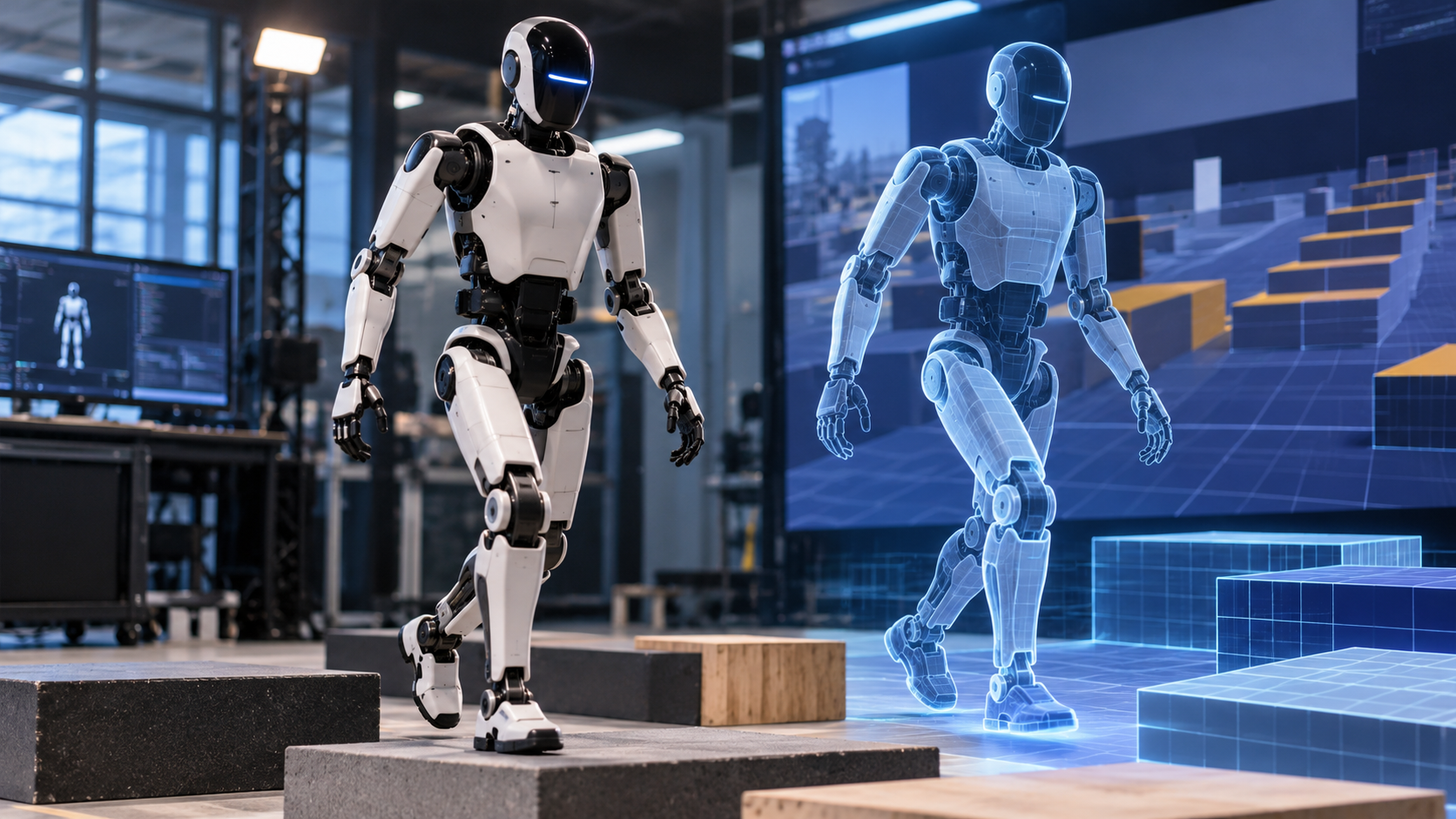
AI is moving from screens into the physical world. A chatbot answers a question on a display. A robot has to interpret sensors, keep its balance, move safely and respond to an environment that does not always behave as expected. This is the challenge behind physical AI—and why simulation and digital twins have become important tools in robotics development.
NVIDIA’s October 2026 Microduck demonstration offers a useful example: the keynote described a workflow that combined an RTX Spark development machine, a digital twin and cloud training. This guide explains the ideas behind that workflow, how simulation differs from training, and why success in a virtual environment still needs to be checked on real hardware.
1. What is physical AI?
Physical AI is a broad term for AI systems that perceive, reason about or act within the physical world. Examples include mobile robots, robot arms, warehouse automation and humanoid research platforms. Unlike software that produces only text or images, these systems must connect model outputs to physical actions through sensors, controllers and mechanical hardware.
That makes reliability especially important. A robot may need to recognize an object, estimate its position, plan a movement, control its motors and respond when something changes. The AI model is one part of a larger system—not a replacement for mechanics, safety controls or testing.
2. What is a digital twin in robotics?
A digital twin is a digital representation of a physical system and, depending on the application, its environment and behavior. In robotics development, a simulated robot can include a model of its joints, motors, sensors, physical properties and surroundings. Developers can use this virtual setup to inspect motion, test scenarios and collect synthetic training data.
A useful twin is more than a 3D model that looks realistic. Its physics, sensor assumptions and timing must be suitable for the task. A beautiful render alone does not prove that the simulated robot will behave like the real one.
3. NVIDIA Isaac Sim vs Isaac Lab: what is the difference?
NVIDIA Isaac Sim is a robotics simulation framework for building physically based virtual environments, testing systems and generating synthetic data. It helps developers assemble scenes, configure robot and sensor models, and evaluate behavior in simulation.
NVIDIA Isaac Lab is a robot-learning framework built on Isaac Sim. It supports training robot policies at scale, including reinforcement-learning and imitation-learning workflows. Put simply: Isaac Sim provides the simulated world and testing environment; Isaac Lab adds tools focused on learning how a robot should act within it.
4. How robot simulation and training fit together
There is no single workflow that suits every robot, but a common development loop looks like this:
How does a robot learn?
In reinforcement learning, a policy improves through repeated interactions with an environment and a reward signal designed around a task. In imitation learning, a model learns from demonstrations or recorded examples. Some projects combine these approaches with perception models, hand-designed controllers and other methods. The appropriate choice depends on the task, available data, safety constraints and evaluation requirements.
5. What is the sim-to-real gap?
The sim-to-real gap is the difference between what a robot experiences in simulation and what happens on physical hardware. A virtual surface may have different friction from the real one; a camera may see noise or changing light; a motor may respond more slowly than its model predicts. Even small mismatches can affect balance, grasping or navigation.
| Potential mismatch | Why it matters | Common response |
|---|---|---|
| Physics and friction | Movement may differ on real surfaces. | Calibrate assumptions and test varied conditions. |
| Sensor data | Real cameras and depth sensors include noise, occlusion and lighting changes. | Model sensor limits and validate perception. |
| Hardware variation | Motors, batteries and mechanical parts are not perfectly identical. | Measure the actual robot and test across operating conditions. |
| Unexpected situations | The real environment may contain objects or movements absent from training. | Evaluate edge cases and maintain safe fallback behavior. |
Developers can reduce the gap through better measurements, varied simulated conditions, real-world data, staged deployment and careful evaluation. But simulation is not a guarantee. Testing on the physical system remains essential, particularly where a failure could damage equipment or put people at risk.
6. Where does computing power fit in?
Robotics workflows can use different computers for different jobs. A developer workstation may coordinate tools, build scenes and inspect results. GPUs can accelerate simulation or model workloads; cloud resources can provide capacity for large parallel training runs. A robot then runs the software and policy appropriate to its onboard hardware and operating constraints.
The Microduck keynote is a good example of why it is misleading to say that one desktop device did everything. NVIDIA’s presentation described agents and scene-building on RTX Spark, training thousands of simulated robots in the cloud, then downloading and evaluating a policy before deployment. The local machine, cloud infrastructure and physical robot had different roles.
For PC buyers, the practical lesson is to choose hardware for a real workload. Gaming, local model inference, 3D rendering and large-scale robot learning can have very different memory, software and compute requirements. Our scheduled guide, Running AI Locally on Your PC, will cover general PC memory and GPU considerations; it should not be treated as a substitute for the system requirements of a specific robotics framework.
7. Frequently asked questions
Does a digital twin have to look photorealistic?
No. It needs enough physical and sensor accuracy for the task being studied. Visual detail may help with some perception tasks, while other tests depend more on dynamics, contact, timing or sensor behavior.
Does training in simulation mean a robot is ready for real life?
No. A policy should be evaluated against relevant scenarios, deployed in stages and tested on the actual robot. Real-world conditions can differ from the simulation.
Is Isaac Sim the same as Isaac Lab?
No. Isaac Sim focuses on robotics simulation, testing and synthetic data. Isaac Lab builds on that environment to support robot-learning workflows.
Can people learn about robotics without owning a robot?
Yes. Documentation, simulation environments and public datasets can help learners understand the concepts before they work with physical hardware. The setup and computing requirements vary by tool.
Sources and further reading
- NVIDIA Isaac Sim — official robotics simulation platform
- NVIDIA Isaac Lab — robot learning framework
- NVIDIA documentation — the Isaac platform explained
- NVIDIA — RTX Spark and the Microduck workflow
المؤسسة الفرنسية للكمبيوتر · شرح الذكاء الاصطناعي
الذكاء الاصطناعي بدأ ينتقل من الشاشات إلى العالم الحقيقي. الشات بوت ممكن يجاوب على سؤال، لكن الروبوت لازم يفهم بيانات الحساسات، ويحافظ على توازنه، ويتحرك بأمان ويتعامل مع بيئة مش دايمًا بتتصرف زي المتوقع. هنا بيظهر مفهوم Physical AI أو الذكاء الاصطناعي المتصل بالعالم المادي، وبتظهر أهمية المحاكاة والتوأم الرقمي في تطوير الروبوتات.
عرض Microduck من NVIDIA في أكتوبر 2026 مثال مفيد: الكلمة شرحت سير عمل بيجمع بين جهاز RTX Spark للتطوير، وتوأم رقمي، وتدريب سحابي. الدليل ده بيشرح الأفكار الأساسية وراء الطريقة دي، والفرق بين المحاكاة والتدريب، وليه النجاح في البيئة الافتراضية لازم يتأكد على جهاز حقيقي.
1. يعني إيه الذكاء الاصطناعي المادي Physical AI؟
Physical AI مصطلح واسع لأنظمة الذكاء الاصطناعي اللي بتستقبل معلومات من العالم الحقيقي أو بتخطط لأفعال فيه أو بتنفذها. أمثلة على كده الروبوتات المتحركة، وأذرع الروبوتات، وأتمتة المخازن، ومنصات أبحاث الروبوتات الشبيهة بالبشر. بعكس برنامج بيطلع نص أو صور بس، الأنظمة دي لازم تربط نتائج النماذج بأفعال مادية عن طريق الحساسات ووحدات التحكم والمكونات الميكانيكية.
عشان كده الاعتمادية مهمة جدًا. الروبوت ممكن يحتاج يتعرف على جسم، ويقدّر مكانه، ويخطط لحركة، ويتحكم في الموتورات ويتصرف لما الظروف تتغير. نموذج الذكاء الاصطناعي جزء من منظومة أكبر، مش بديل عن الميكانيكا أو وسائل الأمان أو الاختبارات.
2. إيه هو التوأم الرقمي في الروبوتات؟
التوأم الرقمي هو تمثيل رقمي لنظام مادي، وممكن يشمل البيئة والسلوك حسب التطبيق. في تطوير الروبوتات، النموذج الافتراضي ممكن يتضمن المفاصل والموتورات والحساسات والخصائص الفيزيائية والبيئة المحيطة. المطورين يقدروا يستخدموا الإعداد ده لفحص الحركة واختبار سيناريوهات وتجهيز بيانات تدريب اصطناعية.
التوأم المفيد مش مجرد مجسم ثلاثي الأبعاد شكله واقعي. لازم الفيزياء وافتراضات الحساسات والتوقيت تكون مناسبة للمهمة. جودة الصورة وحدها مش دليل إن الروبوت الافتراضي هيتصرف زي الروبوت الحقيقي.
3. إيه الفرق بين NVIDIA Isaac Sim وIsaac Lab؟
NVIDIA Isaac Sim إطار عمل لمحاكاة الروبوتات وبناء بيئات افتراضية قائمة على الفيزياء، واختبار الأنظمة وإنشاء بيانات اصطناعية. بيساعد المطورين يجهزوا المشاهد ويضبطوا نماذج الروبوت والحساسات ويقيّموا السلوك في المحاكاة.
NVIDIA Isaac Lab إطار عمل لتعلّم الروبوتات مبني على Isaac Sim. بيدعم تدريب سياسات حركة الروبوت على نطاق واسع، بما في ذلك التعلم بالتعزيز والتعلم من الأمثلة. ببساطة: Isaac Sim بيقدم العالم الافتراضي وبيئة الاختبار، وIsaac Lab بيضيف أدوات متخصصة في تعلّم الروبوت يتصرف إزاي داخل البيئة دي.
4. إزاي المحاكاة والتدريب بيكملوا بعض؟
مفيش سير عمل واحد يناسب كل الروبوتات، لكن دورة تطوير شائعة بتكون كالتالي:
الروبوت بيتعلم إزاي؟
في التعلم بالتعزيز Reinforcement Learning، سياسة الحركة بتتحسن من خلال تفاعلات متكررة مع البيئة وإشارة مكافأة مصممة للمهمة. أما التعلم من الأمثلة Imitation Learning، فالنموذج بيتعلم من عروض أو أمثلة مسجلة. بعض المشاريع بتجمع الطرق دي مع نماذج الإدراك ووحدات تحكم مصممة يدويًا وأساليب أخرى. الاختيار بيعتمد على المهمة والبيانات المتاحة ومتطلبات الأمان والتقييم.
5. يعني إيه الفجوة بين المحاكاة والواقع؟
الفجوة بين المحاكاة والواقع Sim-to-Real هي الفرق بين اللي الروبوت بيواجهه افتراضيًا واللي بيحصل على الجهاز الحقيقي. سطح افتراضي ممكن يكون احتكاكه مختلف عن الواقع؛ الكاميرا ممكن تتأثر بالضوضاء أو تغير الإضاءة؛ والموتور ممكن يستجيب أبطأ من النموذج المتوقع. حتى الفروق الصغيرة ممكن تأثر على التوازن أو الإمساك بالأشياء أو التنقل.
| الاختلاف المحتمل | ليه مهم؟ | التعامل المعتاد |
|---|---|---|
| الفيزياء والاحتكاك | الحركة ممكن تختلف على الأسطح الحقيقية. | معايرة الافتراضات واختبار ظروف متنوعة. |
| بيانات الحساسات | الكاميرات وحساسات العمق بتتأثر بالضوضاء والحجب والإضاءة. | تمثيل حدود الحساسات والتحقق من الإدراك. |
| اختلافات الجهاز | الموتورات والبطاريات والأجزاء الميكانيكية مش متطابقة تمامًا. | قياس الروبوت الفعلي واختباره في ظروف تشغيل مختلفة. |
| مواقف غير متوقعة | الواقع ممكن يحتوي على أجسام أو حركات مش موجودة في التدريب. | اختبار الحالات الصعبة وتوفير سلوك آمن بديل. |
المطورين يقدروا يقللوا الفجوة بقياسات أفضل وظروف محاكاة متنوعة وبيانات من الواقع ونشر تدريجي وتقييم دقيق. لكن المحاكاة مش ضمان. الاختبار على الروبوت الفعلي يفضل ضروري، خصوصًا لو الفشل ممكن يتلف معدات أو يعرّض الناس للخطر.
6. إيه دور قوة الحوسبة؟
سير عمل الروبوتات ممكن يستخدم أكتر من كمبيوتر، وكل جهاز له وظيفة. محطة التطوير ممكن تنسق الأدوات وتبني المشاهد وتراجع النتائج. وحدات GPU تقدر تسرّع المحاكاة أو تشغيل النماذج، والموارد السحابية ممكن توفر قدرة أكبر للتدريب المتوازي واسع النطاق. بعد كده الروبوت بيشغّل البرنامج وسياسة الحركة المناسبة لقدراته وقيود التشغيل.
عرض Microduck مثال كويس ليه مش دقيق نقول إن جهاز مكتبي واحد عمل كل حاجة. شرح NVIDIA وصف استخدام وكلاء وأدوات بناء المشاهد على RTX Spark، وتدريب آلاف الروبوتات الافتراضية في السحابة، وبعدها تنزيل سياسة الحركة وتقييمها قبل نشرها. الجهاز المحلي والسحابة والروبوت الحقيقي كان لكل واحد منهم دور مختلف.
بالنسبة لمشتري الكمبيوتر، الخلاصة هي اختيار المكونات حسب المهمة الفعلية. الألعاب وتشغيل النماذج محليًا والرندر ثلاثي الأبعاد وتدريب الروبوتات على نطاق كبير ممكن يكون لكل واحد منها متطلبات مختلفة في الذاكرة والبرامج وقوة الحوسبة. دليلنا المجدول عن تشغيل الذكاء الاصطناعي محليًا على الكمبيوتر هيتناول متطلبات GPU والذاكرة العامة، لكنه مش بديل عن متطلبات أي إطار عمل روبوتات بعينه.
7. أسئلة شائعة
هل لازم التوأم الرقمي يكون واقعي جدًا في الشكل؟
لأ. المهم إنه يكون دقيقًا بالقدر الكافي في الفيزياء والحساسات للمهمة اللي بنختبرها. التفاصيل البصرية ممكن تساعد في بعض مهام الإدراك، بينما اختبارات أخرى تعتمد أكثر على الحركة والتلامس والتوقيت وسلوك الحساسات.
هل التدريب في المحاكاة معناه إن الروبوت جاهز للواقع؟
لأ. لازم تقييم سياسة الحركة في سيناريوهات مناسبة، ونشرها تدريجيًا واختبارها على الروبوت الفعلي. ظروف العالم الحقيقي ممكن تختلف عن المحاكاة.
هل Isaac Sim هو نفسه Isaac Lab؟
لأ. Isaac Sim بيركز على محاكاة الروبوتات واختبارها وإنشاء بيانات اصطناعية، بينما Isaac Lab مبني عليه لدعم سير عمل تعلّم الروبوتات.
هل أقدر أتعلم عن الروبوتات من غير ما أشتري روبوت؟
أيوه. التوثيق وبيئات المحاكاة والبيانات العامة بتساعد المتعلمين يفهموا الأساسيات قبل التعامل مع أجهزة فعلية. متطلبات البرامج والحوسبة بتختلف من أداة للتانية.
المصادر وقراءة إضافية
- NVIDIA Isaac Sim — منصة محاكاة الروبوتات
- NVIDIA Isaac Lab — إطار تعلم الروبوتات
- توثيق NVIDIA — شرح منظومة Isaac
- NVIDIA — RTX Spark وسير عمل Microduck