


AMD Launches Ryzen 5 5500F and Ryzen 5 7500 Two New Budget CPUs for AM4 and AM5
AMD has added two new six-core processors to its desktop lineup, but they target very different sides of the PC-building market.
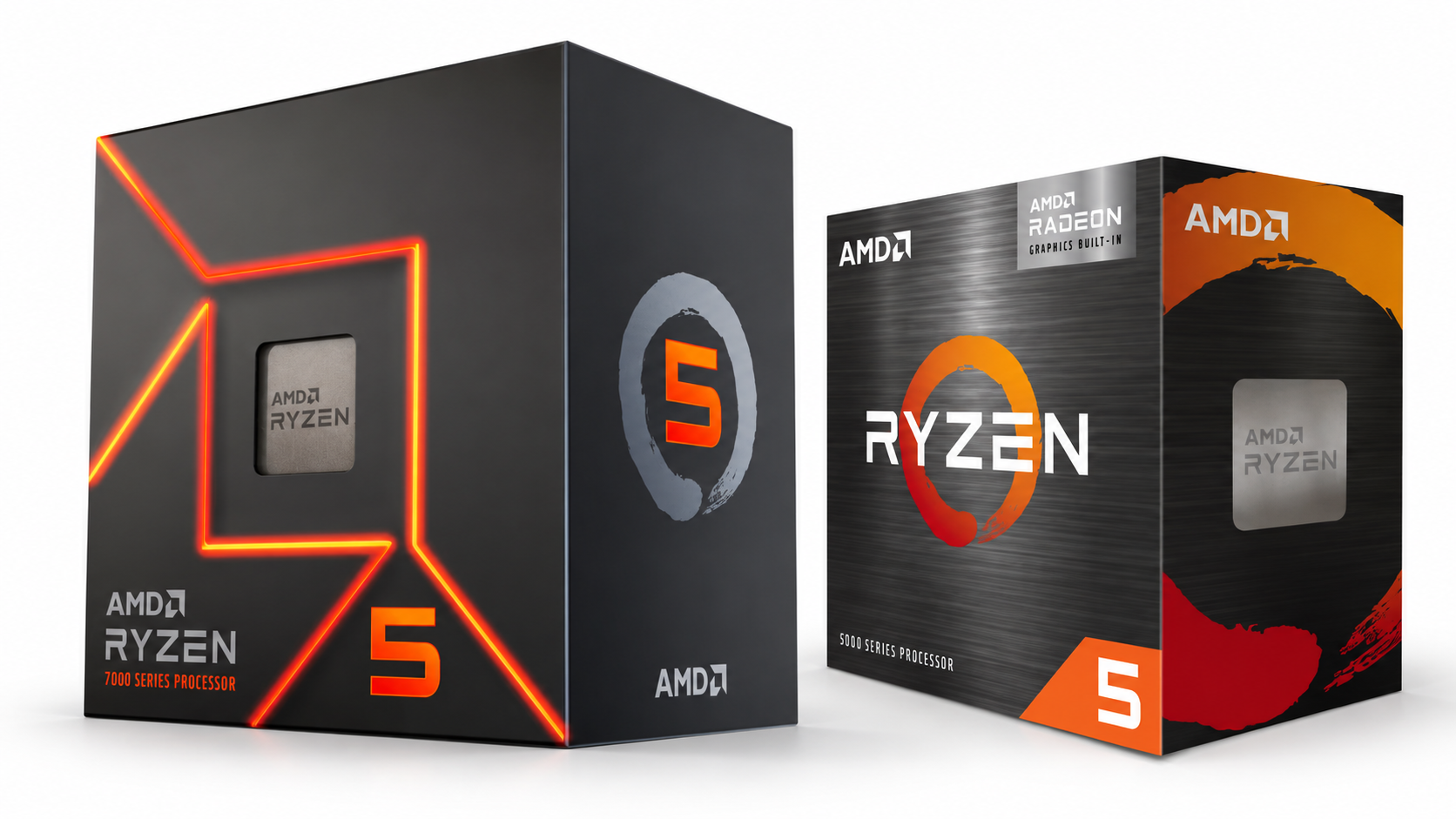
Path A · Platform Longevity
Ryzen 5 5500F
Zen 3 · AM4 · DDR4 · PCIe 4.0 · No iGPU
Path B · New Platform Entry
Ryzen 5 7500
Zen 4 · AM5 · DDR5 · PCIe 5.0 · Radeon iGPU
The new Ryzen 5 5500F keeps the long-running AM4 platform alive with a Zen 3 design and DDR4 memory support, while the Ryzen 5 7500 brings a new entry point to AM5 with Zen 4, DDR5 and integrated Radeon graphics. Both processors officially launched on September 10, 2026.
That makes this launch more interesting than the model numbers initially suggest. AMD isn’t simply adding two more CPUs to its catalog — it’s offering builders a choice between extending an existing AM4 system and moving into the newer AM5 platform.
Ryzen 5 5500F: AM4 Gets Another CPU
The Ryzen 5 5500F is based on AMD’s Zen 3 architecture and uses the AM4 socket. It features 6 cores and 12 threads, a 3 GHz base clock and boost clocks of up to 4.4 GHz. The processor carries a 65W default TDP and includes 16MB of L3 cache.
The important part isn’t that Zen 3 is new — it isn’t. The appeal is that AMD is still giving existing AM4 builders another processor option without forcing them to replace their motherboard and memory.
The 5500F supports DDR4 memory up to DDR4-3200 and PCIe 4.0. AMD lists compatibility with a wide range of AM4 chipsets, including X570, X470, X370, B550, B450, B350 and A520.
Important
The Ryzen 5 5500F requires a discrete graphics card. It does not provide integrated graphics.
Architecture
Zen 3
Cores / Threads
6 / 12
Platform
AM4 · DDR4
iGPU
None
Ryzen 5 5500F specifications
| Specification | Ryzen 5 5500F |
|---|---|
| Architecture | Zen 3 |
| Cores / Threads | 6 / 12 |
| Base Clock | 3.0 GHz |
| Boost Clock | Up to 4.4 GHz |
| L2 Cache | 3 MB |
| L3 Cache | 16 MB |
| Default TDP | 65W |
| Socket | AM4 |
| Memory | DDR4 |
| Official Memory Speed | Up to DDR4-3200 |
| PCIe | PCIe 4.0 |
| Integrated Graphics | No |
| Included Cooler | AMD Wraith Stealth |
| Launch Date | September 10, 2026 |
Source: AMD.
Ryzen 5 7500: A Budget AM5 Option With Integrated Graphics
The Ryzen 5 7500 takes a different approach. It is based on Zen 4, uses the AM5 socket, and also has 6 cores and 12 threads. Its 3.7 GHz base clock can boost to up to 5 GHz, while its 65W default TDP keeps it within the familiar mainstream Ryzen power envelope.
The platform difference is significant. The Ryzen 5 7500 supports DDR5 memory, PCIe 5.0 and AMD EXPO memory technology. AMD lists support across current AM5 chipsets including A620, B650/B650E, X670/X670E, X870/X870E, B840 and B850.
It also has something the 5500F does not: integrated Radeon graphics. AMD lists two graphics cores running at 2,200 MHz. This isn’t intended to replace a gaming graphics card, but it can provide display output and basic graphics functionality when a discrete GPU isn’t installed.
Architecture
Zen 4
Cores / Threads
6 / 12
Platform
AM5 · DDR5
iGPU
Radeon · 2 cores
Ryzen 5 7500 specifications
| Specification | Ryzen 5 7500 |
|---|---|
| Architecture | Zen 4 |
| Cores / Threads | 6 / 12 |
| Base Clock | 3.7 GHz |
| Boost Clock | Up to 5.0 GHz |
| L2 Cache | 6 MB |
| L3 Cache | 32 MB |
| Default TDP | 65W |
| Socket | AM5 |
| Memory | DDR5 |
| Official Memory Speed | Up to DDR5-5200 |
| PCIe | PCIe 5.0 |
| Integrated Graphics | Radeon, 2 cores |
| iGPU Frequency | 2,200 MHz |
| Included Cooler | AMD Wraith Stealth |
| Launch Date | September 10, 2026 |
Source: AMD.
Ryzen 5 5500F vs Ryzen 5 7500: What’s Actually Different?
On paper, both processors are six-core, 12-thread Ryzen 5 chips. The platform underneath them is where the real separation happens.
| Feature | Ryzen 5 5500F | Ryzen 5 7500 |
|---|---|---|
| Architecture | Zen 3 | Zen 4 |
| Socket | AM4 | AM5 |
| Cores / Threads | 6 / 12 | 6 / 12 |
| Boost Clock | 4.4 GHz | 5.0 GHz |
| L3 Cache | 16 MB | 32 MB |
| Memory | DDR4 | DDR5 |
| PCIe | 4.0 | 5.0 |
| Integrated Graphics | No | Yes |
| TDP | 65W | 65W |
| Platform Position | AM4 upgrade / value | AM5 entry-level |
AMD’s specifications make the distinction clear: the 5500F is about keeping an AM4 system relevant, while the 7500 belongs to the newer AM5 ecosystem.
The Interesting Part: AMD Is Still Investing in AM4
The Ryzen 5 5500F is arguably the more unusual announcement. AM4 launched in 2016, yet AMD continues to add processors to the platform.
That matters because there is still a huge installed base of AM4 systems. For someone already using an AM4 motherboard and DDR4 memory, moving to the 5500F can potentially mean upgrading the CPU without rebuilding the entire platform. That’s a very different proposition from buying into AM5 for the first time.
The 5500F therefore makes the most sense when the existing hardware is part of the equation.
The Ryzen 5 7500 Makes More Sense for a New AM5 Build
For someone starting a new PC rather than upgrading an existing AM4 machine, the Ryzen 5 7500 tells a different story. AM5 brings DDR5, PCIe 5.0 and a newer CPU architecture. AMD also continues to support modern AM5 motherboard generations, giving buyers access to a broader current platform.
The integrated Radeon graphics are another useful difference. Even if the system eventually receives a dedicated GPU, having basic integrated graphics can make troubleshooting easier and allows the computer to produce a display signal without relying on a discrete graphics card.
Where the Two CPUs Fit
The easiest way to understand the launch is to forget the Ryzen 5 branding for a moment.
Ryzen 5 5500F
An inexpensive route for an AM4 system that already has DDR4 and a graphics card.
Ryzen 5 7500
A newer-platform option for builders who want AM5, DDR5 and the flexibility of integrated graphics.
Neither processor automatically makes the other obsolete. They are solving different problems.
That distinction is important when comparing CPU prices. A cheaper processor isn’t necessarily the cheaper PC once the motherboard, memory and graphics requirements are included.
AMD’s Budget CPU Strategy Is Getting More Interesting
The timing is also notable. Recent reporting around the launch has highlighted elevated DDR5 memory costs, making inexpensive AM4 hardware more attractive for builders who are trying to control the total cost of a system.
That gives AMD an unusual two-platform strategy:
AM4 + DDR4
For squeezing more value out of existing hardware.
AM5 + DDR5
For new systems built around the newer platform.
Rather than forcing every budget buyer toward the newest ecosystem, AMD is effectively keeping both routes open.
Should You Buy the Ryzen 5 5500F or Ryzen 5 7500?
The answer depends heavily on what you’re building.
Choose the 5500F if…
- → You already have an AM4 motherboard.
- → You already own DDR4 memory.
- → You have or plan to use a discrete graphics card.
- → Your priority is minimizing the cost of a platform upgrade.
- → You don’t need AM5’s newer connectivity standards.
Consider the 7500 if…
- → You’re building a new PC.
- → You want the AM5 platform.
- → You are moving to DDR5.
- → You want PCIe 5.0 support.
- → Having integrated graphics is useful.
- → You want a newer Zen 4-based platform.
The key is to compare the whole platform, not just the CPU.
A CPU that costs less can become the more expensive choice once motherboard and memory costs are included.
AMD Ryzen 5 5500F and 7500: The Bigger Picture
AMD’s latest Ryzen 5 launch isn’t about introducing a revolutionary architecture. Instead, it’s about giving budget builders two different paths.
The Ryzen 5 5500F extends the life of the remarkably durable AM4 platform, while the Ryzen 5 7500 provides a comparatively accessible entry point into AM5. Both deliver six cores and 12 threads, but everything surrounding those cores — the memory standard, PCIe generation, graphics capabilities and motherboard ecosystem — is substantially different.
For existing AM4 owners, the 5500F could be the more interesting announcement.
For a completely new build, the Ryzen 5 7500 deserves closer attention because you’re buying into the newer platform rather than simply extending an older one.
And that’s probably the most useful way to look at this launch: AMD hasn’t chosen between AM4 and AM5 for budget builders. It has given them a reason to consider both.
Frequently Asked Questions
Does the Ryzen 5 5500F have integrated graphics?
Can I use the Ryzen 5 7500 in an AM4 motherboard?
Which CPU is better for a budget gaming PC?
When did the Ryzen 5 5500F and Ryzen 5 7500 launch?
Sources
French Establishment for Computer · Cairo, Egypt · Since 2006