


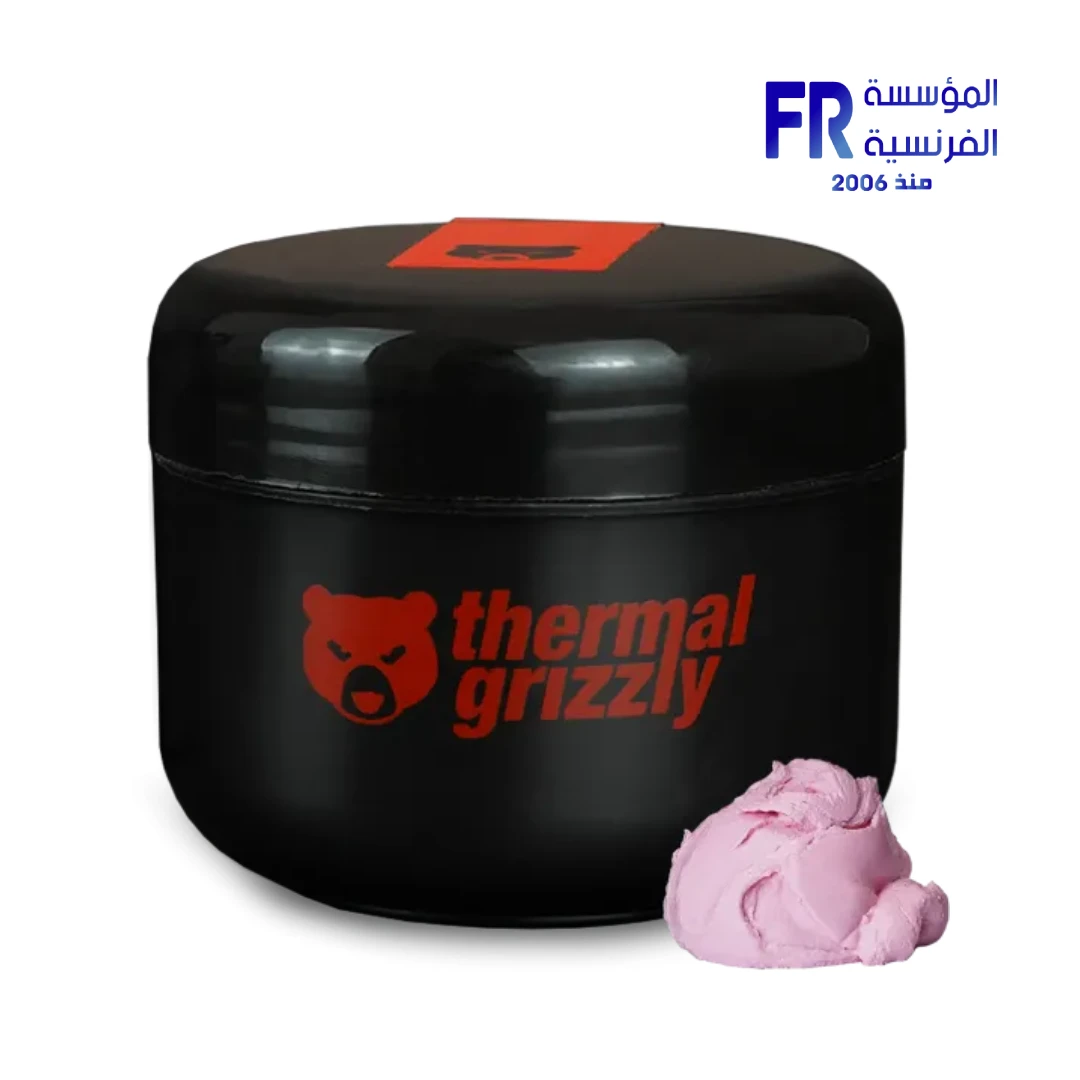
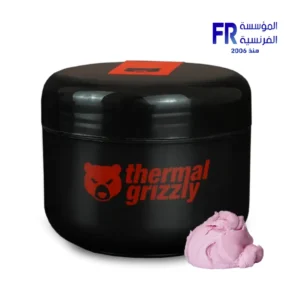
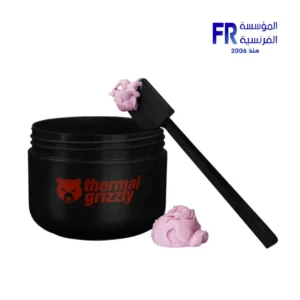


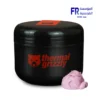
Thermal Grizzly TG Putty Basic 100g Thermal Pad
2056 EGP
- Part Number: TG-P-B-100-R
- Type & Size: Thermally Conductive Gap Filler (Thermal Putty) | 100g | Basic Variant
- Conductivity: Medium Thermal Conductivity | Electrically Non-Conductive | Flexible Gap Filler
- Use Cases: GPU VRAM & VRM Pad Replacement | Compensates Height Differences | Ideal for Water Block Conversions
- Included: 1x TG Putty Basic 100g
- Warranty: 1 Year
Want to be notified when this product is back in stock?
✅ Authorized Thermal Grizzly Partner in Egypt | Official Warranty Coverage | Expert PC Building Consultation Available
Thermal Grizzly TG Putty Basic 100g Thermal Pad
Thermal Grizzly TG Putty Basic is an electrically non-conductive alternative to conventional thermal pads. As an easy-to-apply and flexible gap filler, it compensates for height differences, making it ideal as a replacement for thermal pads on GPUs. Because graphics cards typically feature several types of thermal pads of varying thicknesses from the factory, TG Putty simplifies replacement and cooler conversion work. This is the 100g size with medium thermal conductivity, part of the Basic line. Available at Alfrensia for 2,099 EGP.
⚡ Engineering Highlights at a Glance:
- Flexible Gap Filler: Because TG Putty is moldable, it fills irregular gaps that rigid thermal pads cannot reach.
- Compensates for Height Differences: Unlike pre-cut pads that come in fixed thicknesses, putty adapts to whatever gap exists between the PCB and the cooler or backplate.
- Electrically Non-Conductive: Because the putty does not conduct electricity, it is safe to use near exposed contacts and SMD components.
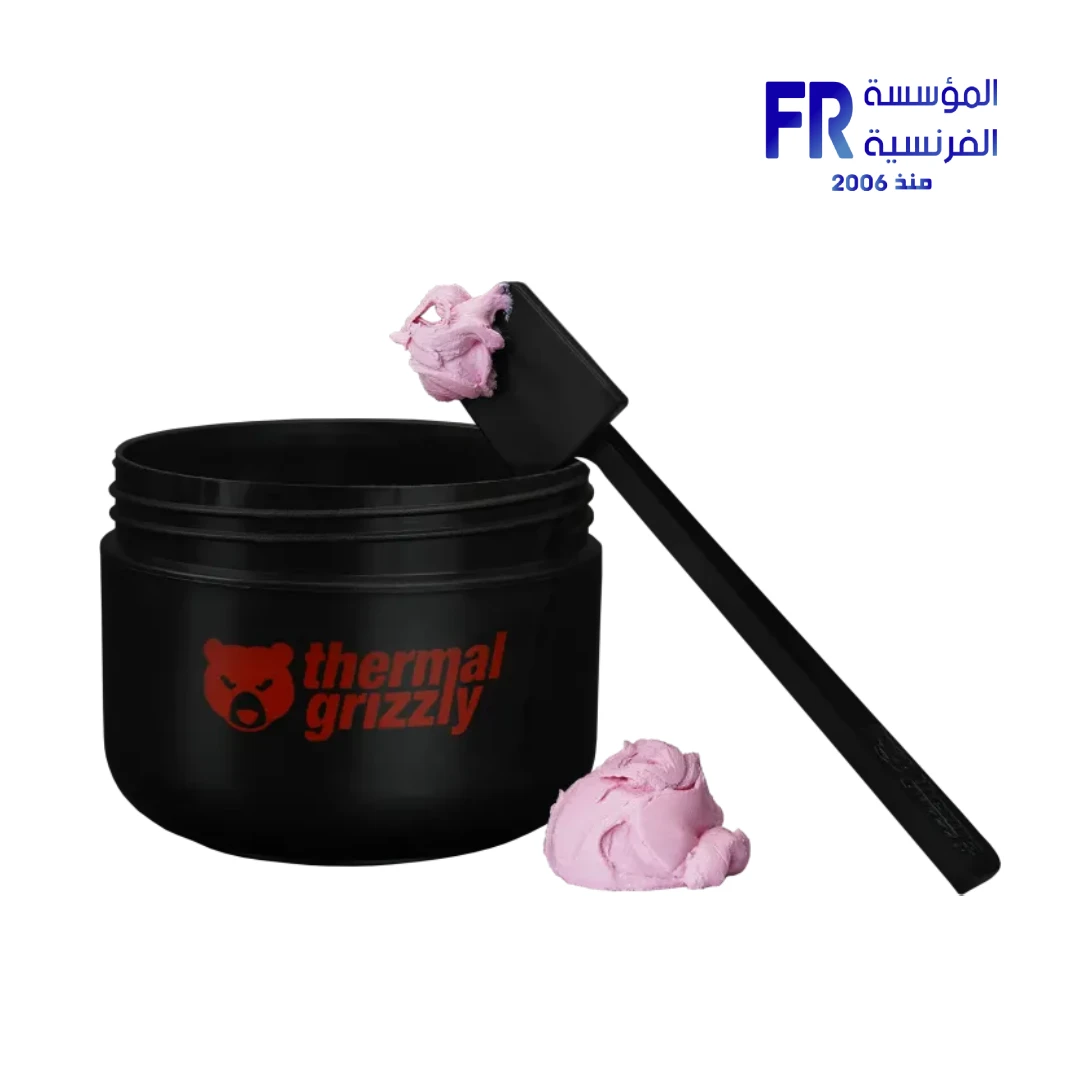
- Easy to Apply: The putty can be shaped by hand or with a spatula, which makes it simpler than cutting multiple pad sizes to fit.
- Medium Thermal Conductivity: The Basic variant offers medium conductivity, suitable for VRAM and VRM cooling where pad thickness varies.
- 100g Size: Enough material to service multiple graphics cards or to fully fill a large GPU’s front and back gaps.
- Not for CPUs: TG Putty is designed for gap filling on GPUs, not for use on processor IHS or Direct Die applications.
Why Choose Putty Instead of Thermal Pads?
Graphics cards typically use thermal pads of different thicknesses across the PCB. Some areas have thin gaps, while others have large gaps between the PCB and the backplate. Replacing pads means ordering multiple thicknesses and cutting them to size, which is time-consuming and error-prone. Because TG Putty is a flexible gap filler, it adapts to any gap size and does not require precise cutting. As a result, you can replace all the pads in a GPU with a single container of putty. This saves time and reduces the risk of using a pad that is too thick or too thin, which can lead to poor contact or damaged components.
Variants and Thermal Conductivity
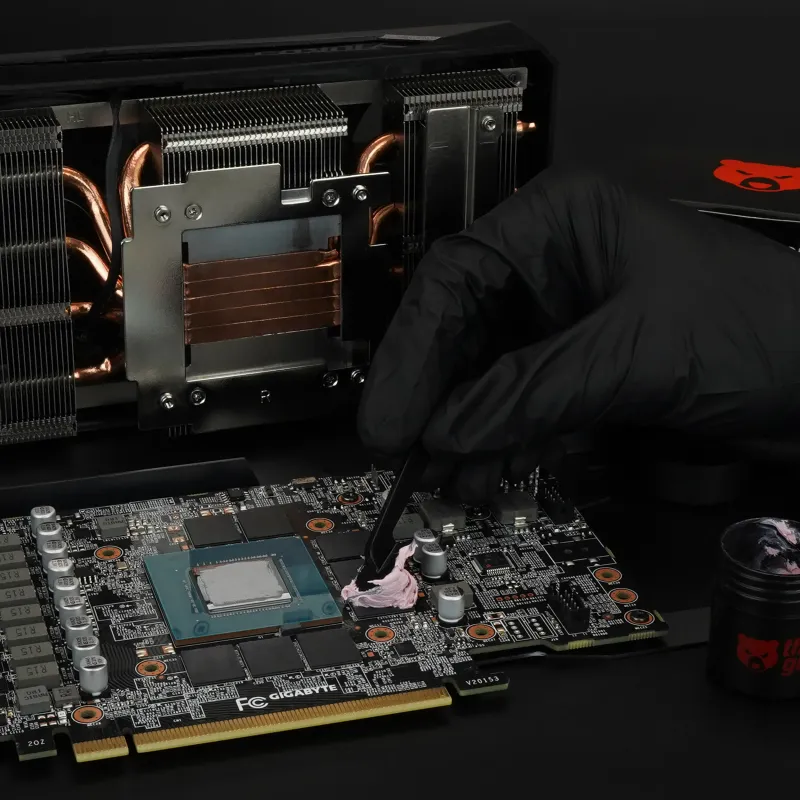
TG Putty is available in three versions that mainly differ in their thermal conductivity. Each variant is designed for different requirements in heat dissipation and is available in 30g and 100g sizes. The Basic variant offers medium thermal conductivity, which is suitable for VRAM and VRM cooling where the thermal load is moderate. The Advance variant offers good thermal conductivity for higher-performance cards, and the Pro variant offers very good thermal conductivity for demanding applications. This listing is the Basic variant in 100g size.
Recommended TG Putty Amount
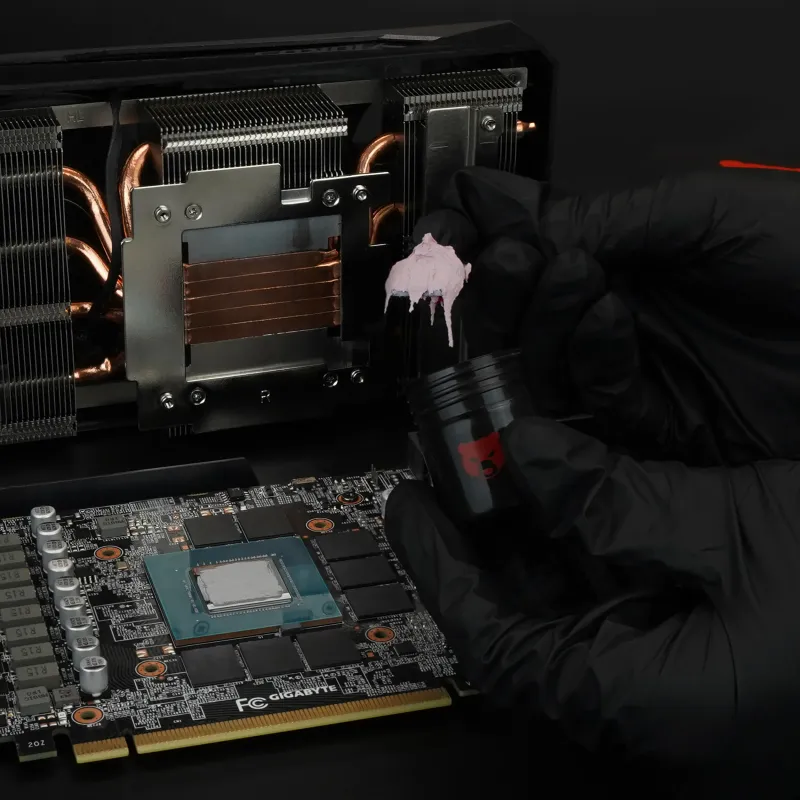
For modifying a single, smaller graphics card without an active backplate, such as a GeForce GTX 1060, approximately one 30g container of TG Putty is required. For larger graphics cards, such as a GeForce RTX 4090, one 30g container is generally sufficient for the memory (VRAM) and voltage regulators (VRM) on the front side. On the backside of larger cards, there is often a uniform, larger gap between the PCB and the backplate. In this case, approximately two 30g containers are needed to completely fill this gap. The 100g size therefore provides enough material for a full RTX 4090 repaste, including backside gap filling, with some left over for additional work.
Application Guide: How to Apply TG Putty
Before application, the target surface should be thoroughly cleaned and degreased, for example, using TG Cleaning Wipes or conventional isopropanol. Remove the old pads and residue from the PCB, the cooler, and the backplate. Once the surfaces are dry, take a small amount of putty and shape it by hand or with a spatula. Press it gently onto the areas where pads were originally located, such as over the VRAM chips and VRM components. Because TG Putty stays flexible, it will compress and fill the gap evenly when the cooler is tightened down. Do not apply putty directly to the GPU die or processor IHS. After mounting the cooler, tighten the screws in a diagonal pattern, one turn at a time, to ensure even pressure.
Who is Thermal Grizzly TG Putty Basic For?
Expert Advice and Safety Notes
Do Not Use on CPUs or Direct Die
TG Putty is not suitable for use on processors (IHS or Direct Die) or directly on the GPU die. Because putty is designed as a gap filler, its layer thickness and thermal resistance are higher than a dedicated thermal paste. Using it on a CPU heat spreader or a GPU die would reduce cooling performance and could damage the component.
Cleaning and Storage
Store the container at room temperature and keep it sealed when not in use. Because TG Putty is flexible and does not harden, it can be reused if removed carefully. Always clean the target surface with isopropyl alcohol or TG Cleaning Wipes before applying putty, since oil or dust can reduce adhesion.
⚠️ Disclaimer
Working on a graphics card involves handling delicate electronic components. If you are not comfortable disassembling your GPU, have a qualified technician perform the service. Alfrensia is not responsible for damage caused by improper installation or handling. Always follow the instructions provided by your GPU manufacturer, as some manufacturers void warranties if the cooler is removed.
Product Gallery
Technical Specifications
| Model | TG Putty Basic |
| Brand | Thermal Grizzly |
| SKU / MPN | TG-P-B-100-R |
| EAN | 4260711991714 |
| Content | 100 g |
| Variant | Basic (Medium Thermal Conductivity) |
| Form Factor | Flexible Gap Filler Putty |
| Electrical Conductivity | Electrically Non-Conductive |
| Primary Use | GPU thermal pad replacement (VRAM and VRM) |
| Recommended Application | Not for CPU IHS or Direct Die |
| Available Sizes | 30 g / 100 g |
Expert Recommendation: When to Choose TG Putty Basic
TG Putty Basic is the right choice when you need a flexible gap filler for GPU thermal pad replacement and want to avoid ordering multiple pad thicknesses. Because the putty adapts to any gap size, it simplifies the process for VRAM and VRM cooling. For most mainstream graphics cards, the Basic variant provides adequate thermal conductivity. If you are working on a high-end card with significant thermal loads or converting to a water block, consider the Advance or Pro variants, which offer higher conductivity. The 100g size is the best value if you plan to service multiple GPUs or fully repaste a large card including the backside. Always clean the target surfaces with isopropyl alcohol or TG Cleaning Wipes before application, and remember that TG Putty is not suitable for CPUs or direct die applications.
Frequently Asked Questions
What is TG Putty used for?
TG Putty is a flexible gap filler designed to replace conventional thermal pads on graphics cards. It is used on VRAM and VRM areas where pad thickness varies. It is not suitable for CPUs or direct die applications.
How much putty do I need for a GPU repaste?
For a small GPU without an active backplate, one 30g container is usually enough. For a large GPU like an RTX 4090, one 30g container covers the front side VRAM and VRM, while two more containers are needed to fill the backside gap between the PCB and backplate.
Is TG Putty electrically conductive?
No. TG Putty is electrically non-conductive, so it is safe to use near exposed contacts and small surface-mount components without risking a short circuit.
Can I use TG Putty on my CPU?
No. TG Putty is not suitable for use on processors (IHS or Direct Die) or directly on the GPU die. Because putty is designed as a gap filler, its thermal resistance is higher than a dedicated thermal paste, and using it on a CPU would reduce cooling performance.
What is the difference between Basic, Advance, and Pro variants?
The three variants mainly differ in thermal conductivity. Basic offers medium conductivity, Advance offers good conductivity, and Pro offers very good conductivity. Higher-conductivity variants are better for high-performance GPUs with significant thermal loads.
| MODEL | |
|---|---|
| Color | |
| Part Number | |
| Warranty |
Only logged in customers who have purchased this product may leave a review.

Reviews
There are no reviews yet.