

ALFRENSIA TECHNOLOGY NEWSROOM · 10 NOVEMBER 2026
Google TPU 8tx and TPU 8i Max: Two New AI Systems, Not New Gaming GPUs
Google has expanded its eighth-generation TPU portfolio with two specialised systems: one focused on confidential AI workloads, the other on memory-heavy reasoning at data-centre scale.
Google announced TPU 8tx and TPU 8i Max on 9 November 2026. The announcement matters because it shows how AI infrastructure is being tailored around security, memory bandwidth and networking—not just raw accelerator speed. These are data-centre systems, not graphics cards that PC buyers can install in a desktop.
What exactly did Google announce?
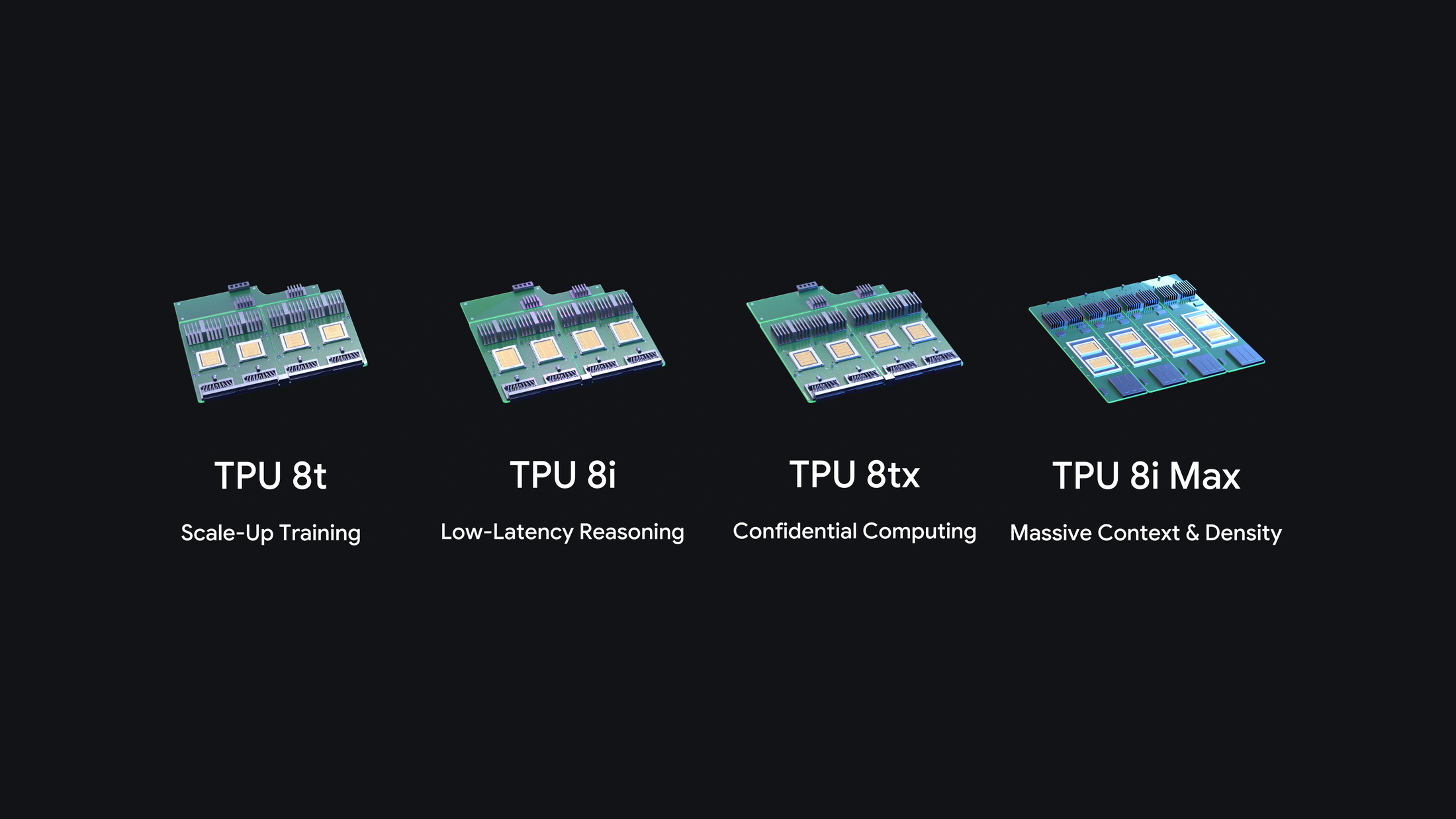
Google is extending an eighth-generation family that already includes TPU 8t for large-scale training and TPU 8i for low-latency reasoning. The new 8tx and 8i Max are specialised configurations built around different workload needs. Google makes an important distinction between a chip and a system: a system combines compute, memory, networking and security into a configuration designed for a particular job.
TPU 8tx
Designed for confidential inference and smaller-scale training, particularly for regulated organisations that need to protect data and model weights while they are being processed.
TPU 8i Max
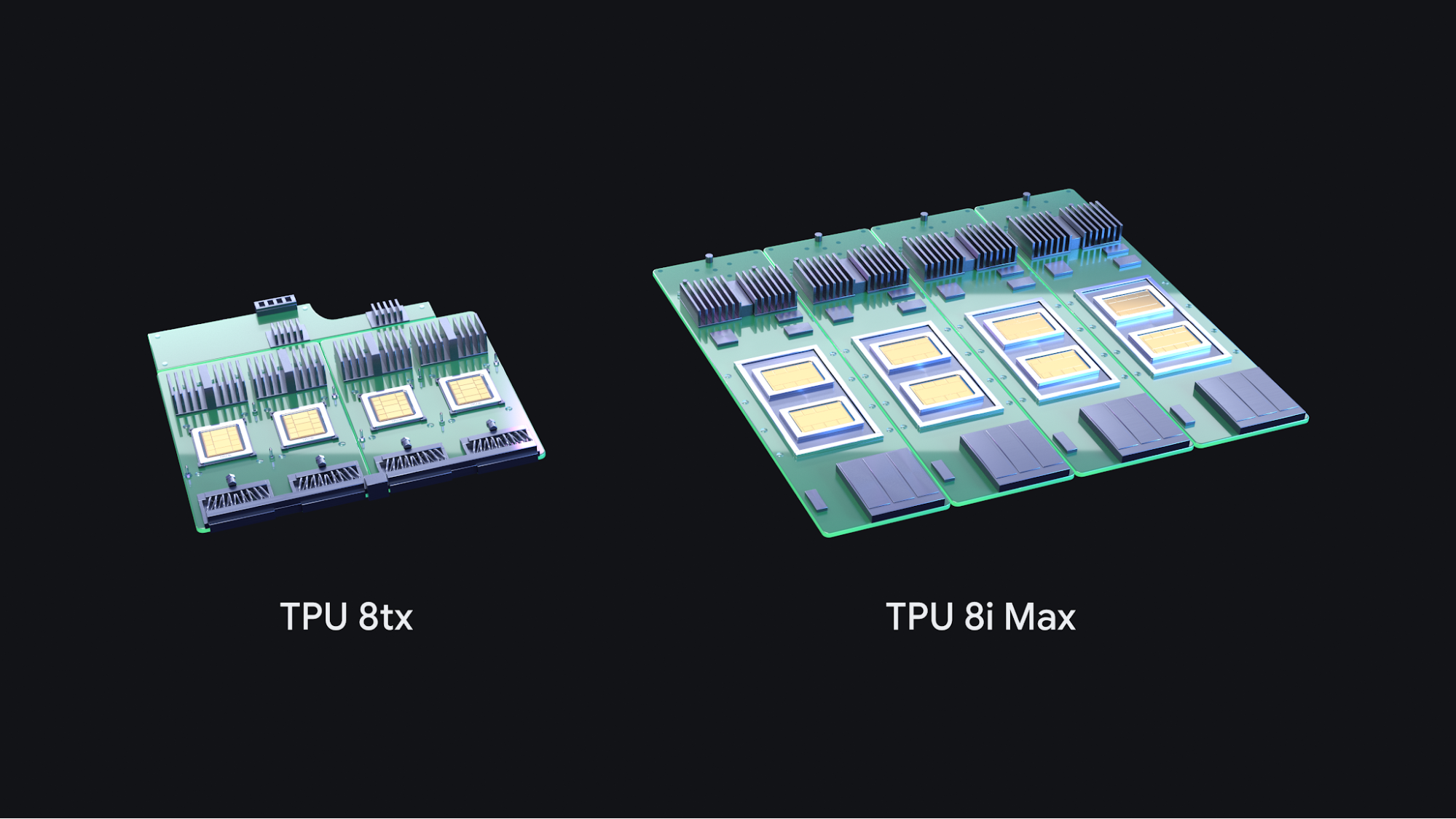
Combines two TPU 8i chips in one package to increase compute and memory resources for workloads with very large contexts and demanding memory traffic.
TPU 8tx: security built into the system
Google says TPU 8tx uses the same silicon as TPU 8t and is paired with fifth-generation AMD EPYC host processors. Its confidential-computing design is intended to keep sensitive data and model weights protected even while the system is actively processing them. Google also says the configuration uses its Boardfly network and can deliver up to twice the latency improvement relative to TPU 8t, with what it describes as a near-zero performance penalty.
Those are Google’s own performance and security claims. They describe the company’s intended architecture and should not be treated as independent benchmark results for every customer workload.
TPU 8i Max: more memory bandwidth for long-context AI
Google says it combines two low-latency TPU 8i chips on one package. Compared with TPU 8i, the company claims double the compute, double the on-chip SRAM and double the HBM bandwidth. The aim is to keep more of the information needed by long-running AI agents close to the accelerator, reducing stalls caused by moving data around a large system.
Can PC buyers in Egypt buy or install these TPUs?
Not as ordinary PC components. TPU 8tx and TPU 8i Max are part of Google’s AI infrastructure portfolio and are intended for data-centre and cloud workloads. Google’s announcement does not provide a retail price in Egypt, a local distributor listing, or a confirmed consumer desktop availability date. It also does not establish that every Google Cloud region will offer both configurations immediately.
What does this mean for Egyptian creators and PC builders?
For most gamers, designers and independent creators in Egypt, the announcement does not create a reason to replace a desktop GPU. Local AI workloads still need to be matched to the software being used, the amount of VRAM required, the model size, system RAM, storage and the cost of electricity or cloud time.
For businesses using hosted AI services, more specialised cloud accelerators could eventually expand the range of available services. The practical questions will be regional availability, pricing, data location, latency and the software frameworks supported by each provider. None of those should be assumed from a hardware announcement alone.
For a local workstation, start with our guide to choosing a GPU for local AI and our explainer on advanced chip packaging and the AI GPU supply chain.
Alfrensia takeaway
TPU 8tx and TPU 8i Max show the growing specialisation of AI infrastructure: confidential processing on one side, large memory and long-context reasoning on the other. The announcement is important for the cloud AI industry, but it is not a new consumer GPU launch and does not, by itself, change what a gamer should buy for a desktop PC in Egypt.
Sources and further reading
- Google Cloud Blog — TPU 8tx and TPU 8i Max announcement, 9 November 2026
- AMD — fifth-generation EPYC processors in Google Cloud TPU 8tx host infrastructure, 9 November 2026
Editorial note: performance figures in this article are attributed to Google and have not been independently benchmarked by Alfrensia.